Ryan Drum
Island Herbs
P O Box 25, Waldron, WA 98297-0025
About Ryan | Articles | Contact Ryan
TRANSGENERATIONAL HERBALISM AND EPIGENOMICS
EPIGENOMICS
Epigenomics is the study of epigenetic changes in gene expression that occur without commensurate changes in DNA base pair sequences; these changes may be transmissible to subsequent generations.
Recent research in the emerging field of Epigenomincs strongly supports the probabilities of therapeutic transgenerational herbalism (Drum, 2002). Epigenomics is developing in response to research showing very convincingly that many cancers are initiated and controlled by transmissible extrachromosomal mechanisms (Esteller,2007).
In an excellent review of environmental epigenomics, Jirtle and Skinner(2007) state: “Epidemiological evidence increasingly suggests that environmental exposures early in development have a role in susceptibility to disease in later life. In addition, some of these environmental effects seem to be passed on through subsequent generations. Epigenetic modifications provide a plausible link between the environment and alterations in gene expression….An increasing body of evidence from animal studies supports the role of environmental epigenetics in disease susceptibility.”
In an earlier paper, Waterland and Jirtle (2003) state:”Early nutrition affects adult metabolism in humans and other mammals via persistent alterations in DNA methylation….dietary methyl supplementation of a/a dams with extra folic acid, vitamin B12, choline, and betaine, alter the phenotype of their offspring via increased CpG methylation…. These findings suggest that dietary supplementation long presumed to be purely beneficial, may have unintended deleterious influences on the establishment of epigenetic gene regulation in humans.”
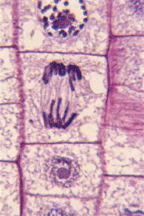 Some
of the most interesting work was done with endocrine disruptors (vinclozolin,
an antiandrogenic compound commonly used as a fungicide in the wine industry,
and methoxychlor an estrogenic compound used as a pesticide to replace DDT)
by Anway, Cupp, etal (2005). This research showed persistent transmission
of structural reproductive damage through 4 generations of rats subsequent
to exposure to the endocrine disruptors Vinclozolin and Methoxychlor.”
These effects were transferred through the male germ line to nearly all males
of all subsequent generations examined. The ability of an environmental factor
(for example, endocrine disruptor) to reprogram the germ line and to promote
a transgenerational disease state has significant implications for evolutionary
biology and disease etiology.”
Some
of the most interesting work was done with endocrine disruptors (vinclozolin,
an antiandrogenic compound commonly used as a fungicide in the wine industry,
and methoxychlor an estrogenic compound used as a pesticide to replace DDT)
by Anway, Cupp, etal (2005). This research showed persistent transmission
of structural reproductive damage through 4 generations of rats subsequent
to exposure to the endocrine disruptors Vinclozolin and Methoxychlor.”
These effects were transferred through the male germ line to nearly all males
of all subsequent generations examined. The ability of an environmental factor
(for example, endocrine disruptor) to reprogram the germ line and to promote
a transgenerational disease state has significant implications for evolutionary
biology and disease etiology.”
The miracle merchants, notably Dawson Church, have expanded epigenetic research conclusions to suggest that our personal genome is changing by the second as we respond not only to our external environment, but also to the fantasy environment of the mind (Church, 2007). He and others, cited extensively in his book (Church, ibid) insist that we can dispense with medicines, herbal and otherwise, and heal ourselves of any illness or disease simply by changing our thoughts. The available data base is still developing but the notion is a very happy one.
Most of the epigenetics research has focused on negative inheritable disease susceptibilities rather than measurable health improvements. I believe that we should assume that positive transmissible extra-chromosomal traits, reflecting responses to favorable environmental opportunities as well as to environmental hazards, are probable in humans and other mammals.
TRANSGENERATIONAL HERBALISM: HEALTH POSITIVE POSSIBILITIES
My interest in the probable connection of early environmental exposure to subsequent adult human health developed over more than 30 year as a practicing herbalist. I continually wondered about patient response variations to the same herbs.
Originally I believed there was a probable genetic component controlling a particular individual’s receptivity to herbal medicine. This receptivity would have been initiated and maintained by Darwinian natural selection mechanisms, especially “survival of the fittest”, and subsequent DNA transmission.
By that model positive receptivity to local healing herbs would favor individual survival and germline survival. The evidence for this is that relatively isolated human populations become increasingly healthy locally.
LIVING LOCALLY
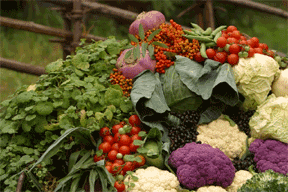 There
is developing interest in “eating locally”, which tends to mean
consuming food grown or produced within a 100 mile radius of where one lives.
This is a rather superficial way to “eat locally”. I have lived
in the same place for over three decades, growing most of the fruits and vegetables
I eat, eating wild foods occurring on the small 5 sq. mi. island I live on,
and returning my wastes, composted feces and diluted fresh urine to my garden
and orchards. The soil, plants, and I are a continuous nutrient loop; many
of my dietary molecules have been through me before at least once. We are
a meta-organism. Food from other gardens does not seem quite right, no matter
how lush or flavorful. It is strange, it is “other”. My resident
molecules do not recognize any of their longtime companions in food from other
places. There is suspicion and biological clumsiness. Continually eating from
the same soil and wild places has made me an obligate dependent on the familiar;
molecular familiarity has become an essential or at least preferred, characteristic
of my food.
There
is developing interest in “eating locally”, which tends to mean
consuming food grown or produced within a 100 mile radius of where one lives.
This is a rather superficial way to “eat locally”. I have lived
in the same place for over three decades, growing most of the fruits and vegetables
I eat, eating wild foods occurring on the small 5 sq. mi. island I live on,
and returning my wastes, composted feces and diluted fresh urine to my garden
and orchards. The soil, plants, and I are a continuous nutrient loop; many
of my dietary molecules have been through me before at least once. We are
a meta-organism. Food from other gardens does not seem quite right, no matter
how lush or flavorful. It is strange, it is “other”. My resident
molecules do not recognize any of their longtime companions in food from other
places. There is suspicion and biological clumsiness. Continually eating from
the same soil and wild places has made me an obligate dependent on the familiar;
molecular familiarity has become an essential or at least preferred, characteristic
of my food.
I tend to harvest the same perennial medicinal herbs year after year for myself and family, and to use in my local practice. I prefer to use mostly herbs I have harvested myself, onisland.
The intense identification with a particular place “The Land” peculiar to native peoples may have a strong epigenetic molecular basis. That may be molecular familiarity as well as good health. Every place is microbially, molecularly, and biomagnetically unique. That is why there is “no place like home”...
Early herbal experience, especially with local herbs, is an important factor in an individual’s developing sense of place; and from that, a community’s collective sense of place. Humans living in a particular place or ecosystem are intimately healed in unseen epigenetic ways via multigenerational contact with local herbal communities just by living in them. In the I Ching, part of the commentary on THE WELL: “ You can always move the town, but you can’t move the well.”
What was the probable molecular mechanism for human adaptations to healing herbs? Was it actual long-term transmissible changes in archival chromosomal DNA? How quickly could local herb adaptation occur? The accepted notion of random DNA/gene mutations from ionizing cosmic rays or other energy sources seemed too slow. I should mention here, that the so-called “Random mutations” are anything but random. A cursory examination of the DNA molecule and its structure will indicate that there is a hierarchy of base linkage fragility and tendencies to spontaneous instability. DNA repair mechanisms are also prone to erratic holidays.
The “species-organism-individual-germline-cell nucleus-chromosomes-genes-DNA sequence” view of heredity is a biological companion generated by monotheistic thinking and analyses.
A more sensible explanation is the early exposure model. This model works very well for the trigenerational reality of humans. In this model a particular individual’s earliest herbal exposures entrain or educate subsequent somatic cells for therapeutic herbal receptivity. I assume that the long human egg latency (up to 60 years) provides for ongoing egg environmental education, “nurture over nature”. I believe that herbs in particular provide essential nutrients needed only in tiny amounts, nanonutrients, for both the waiting eggs, embryos, and human neonates.
WHEN DO WE ACTUALLY BEGIN AS DISTINCT INDIVIDUALS?
We each began as an egg in our mother when she was developing as a fetus in her mother, our maternal grandmother.
The human female begins to produce egg cells for her future offspring at age 6 weeks in utero, in her mother’s uterus. When a healthy human female baby is born, each of her ovaries contains about one million eggs. (The human male embryo develops primitive sperm cells at age six weeks in utero.)
Those eggs are composed of materials ingested by the maternal grandmother. Perhaps we can consider our individual beginning as a molecular and structural entity as an egg developing in our mother’s ovary when she was a developing embryo in her mother’s uterus. This means that our maternal grandmother’s prepartum diet and behaviour have direct primary effects on our earliest development as an egg. The foods and herbs she ate provide not only the basic structural materials for embryo and egg construction but also relatively esoteric secondary plant and animal molecules which can cross the placental barrier and become resident in egg cell membranes and subcellular organelles. I believe this is how we are first herbally entrained by therapeutic herbal molecules, and develop subsequent juvenile and adult preferences for certain foods, herbal medicines, and places.
We also know that it is not only the obvious dietary molecules that enter our bodies, but also the molecules that we walk on, touch with our hands, touch with any bare, unclothed body surface, and inhale. Instead of closed impenetrable bags with bones and muscles, we are selective molecular sponges (at least 40% of pharmaceutical medicines can be delivered by percutaneous perfusion).
This means in addition to food and drink, what your maternal mother touched, sat on, slept on, walked on and through, all potentially contributed molecules destined for her daughter’s developing eggs, one of which became you. Hopefully she sat in wild plants, particularly medicinal herbs, traipsed through meadows and marshes where herbs grew, and fondled them in the preparation of food and medicines. The skin pores on the plantar and palmar surfaces are the body’s largest (although nose pores seem to be vying for the honors). The classic plantar absorption demonstration is to place crushed garlic on the bottom of one foot and then notice the strong odor of garlic on the subject’s breath in less than 2 minutes.
WE ARE THE ONLY NAKED SPECIES
We are the only naked primate and the only naked mammal (maybe one exception, an African swamp rat). Nature tends to keep only those characteristics which have long-term survival benefits. Some apologists have suggested that our hairlessness is for heightened tactile pleasure during romantic/reproductive intimacy. I believe the real reasons are much more generalized. I believe that physiologically significant essential substances, needed only in tiny amounts, ESSENTIAL NANONUTRIENTS, are required to pass through our skin to avoid the acid bath of the stomach. We need to have live plant contact for epidermal uptake and subsequent skin surface residency of nanonutrients prior to active transdermal uptake. More proactive uptake is provided by scratches and punctures from plant spines, needles, burs, and sharp leaf edges.. I believe that little microinjections of significant trace molecules, secondary plant metabolites, dripped onto or contained within and upon sharp spines provide us with needed tiny amounts of specialty substances, the NANONUTRIENTS.
I believe that the absence or a deficiency of essential plant nanonutrients in a particular individual can contribute to less than optimal health. I also suggest that lack of early exposure to essential signature and highly species- or even location-specific plant constituents can impair a particular individual’s ability to optimally use those molecules therapeutically when and where healing is desirable. This may be critical in adult and geriatric patients presenting acute trauma and infectious disease progression.
Nanonutrient deficiency may cause inexplicable systemic illness where no trauma or obvious pathogenic organism seems responsible for symptoms. Humans may have evolved to nakedness first via epigenetics and then to chromosomal memory. I think for optimal health and bodily functioning, reproduction and repair and even survival of the species, we need to facilitate epidermal nanonutrient uptake.
Continual lifelong transdermal herbal molecular uptake is our inherited need. We need regular, even daily environmental herbal contact and absorption as functional maintenance and preventive medicine. Indoor winter sickness may partially result from epidermal herbal deprivation. The so-called “back-to-the-land” movements of the 20th Century might actually have been “back to the herbs” urges.
Recent research indicates that dirty children, those children who regularly play in real soil and who wash with soap only when absolutely forced to, have much healthier immune responses, fewer minor illnesses as adults, heal much faster after physical trauma, and have lower rates of asthma. We need soil contact as well as plant contact.
The primary objection to the longterm storage of education and memory molecules in human eggs is lack of cell volume. Eggs are relatively large, and can store thousands of information proteins in cell and subcellular membranes. James Oschman has suggested that the DNA in the genes and chromosomes is primarily archival and that the functional information is stored as “energy” rather than as molecules (JO pers. Comm. To RD).
The second objection is the complex notion of atomic replacement in living cells, the so-called “dynamic turnover” where it has been estimated that nearly every atom of our bodies has been replaced at least once every seven years; the main tissues not turned over are the lenses of our eyes and the enamel of our teeth due to lack of vascular access. If these molecules are turning over, would they be replaced atom for atom exactly? The long resident half lives of toxic molecules especially fat soluble synthetic poisons in adipose tissue and, pernicious wastes, suggests that some molecules may not participate in dynamic turnover.
Epigenetic researchers (see Waterland and Jirtle) have long recognized the trigenerational reality of egg exposures to environmental influences which manifest in the F2 generation, the grandchildren. Their research looks for transmissible, inheritable structures, processes, and behaviours beyond the F2 generation. An excellent study to F4 is Anway, etal. Their work suggests that human egg and embryo early herbal exposure can be recorded epigenetically and transmitted as epigenetic information to offspring. This cancels both of the primary objections to immediate environmental learning and data storage, namely inadequate molecular storage capacity, and molecular alteration via dynamic turnover.
This suggests we could begin herbal healing of our children and grandchildren as eggs and/or embryos prenatally via deliberate exposure to herbs and herb communities to facilitate enhanced transdermal absorption of signature and marker molecules which may increase the likelihood of future successful herbal healing for not just the immediate trigenerational molecular cascade (Fo-F2), but for many more generations to follow.
THERAPEUTIC SUGGESTIONS
I urge herbal practitioners, herbal users, and concerned humans to touch, taste, fondle, crumple the herbs. Both the wild and cultivated herbs; with a few itchy exceptions, most herbs are safer to consume transdermally than orally. Plant sacrificial herb beds/patches where humans, especially pregnant women and small children, can lay naked on herbs for hours to promote transdermal perfusion of herbal stuff and hopefully enhance future health.
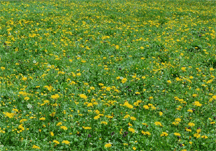 For
families with known genetic susceptibilities to particular pathologies, herbs
known to be therapeutic could be planted together to provide deliberate long
term transdermal therapy. Small children, infants even, could be placed on
the less spiny herbs and allowed to roll, crawl, rip and tear the herbs to
bits, tasting, smelling, just messing with the herbs in joyful encounter.
In truth this is what we have done as toddlers for hundreds of millennia as
mothers left us briefly or placed us on available vegetation for sleep or
play.
For
families with known genetic susceptibilities to particular pathologies, herbs
known to be therapeutic could be planted together to provide deliberate long
term transdermal therapy. Small children, infants even, could be placed on
the less spiny herbs and allowed to roll, crawl, rip and tear the herbs to
bits, tasting, smelling, just messing with the herbs in joyful encounter.
In truth this is what we have done as toddlers for hundreds of millennia as
mothers left us briefly or placed us on available vegetation for sleep or
play.
In our times children delight in playing on grass and in soil/dirt for hours; they run and sneak through meadows becoming stained and scratched during active play. Young children tend to hardly notice little scratches and stains and far less concerned than some hyper-hygienic over-protective parents, child care professionals, and educators. I have watched with delight as my children and grandchildren frolicked naked on bare ground and plants.
Many of our companion wild herbs, plantain, dandelion, chicory, self-heal, many mints, yellowdock, yarrow, mallow, seem to thrive from human body traffic. I think we deprive our children of essential topical herbal nanonutrients and developmental medicines if we do not allow them to be in rough, vigorous plant contact.
Joseph Chilton Pierce in The Magical Child, has suggested that there are essential situations and events which need to occur at certain developmental times in the lives of children. If these events do not occur, development is truncated or stalled; he was mostly referring to sociological and intellectual stages of early human development. I suggest that there are equivalent essential developmental plant molecular exposures, topically absorbed, for healthy human growth and maturation.
No need to restrict herbal bedding to small children and pregnants: plant roll-around, sit-upon herb patches should be an adjunct to every herbal practice. This might help to get herbal practice out of indoor offices and clinics. We have an unhealthy oral fixation in herbal medicine these days. We need to resume using our entire bodies as herbal feeders.
I encourage my patients, especially those who have no herb gardens, to walk through wild herb patches as naked as they dare; to sit naked upon a batch of herbs and get some real live herbal contact as opposed to poultices.
Daily barefoot and barelegs walking through herbs and plants generally is probably an essential part of maintaining health through preventive transdermal herbal self-medication.
Patients that do not get better with common gentle herbs may be victims of inadequate early herbal exposure and imprinting due to herbless urban lifestyles. The need for harsh non-local medicinal herbs is a sign of herbal insensitivity. Or, there may subtle differences in the various herbal medicine delivery vehicles.
Consider the capsule: herbs (including fungi, lichens, seaweeds, freshwater algae) are dried and encapsulated in gelatin capsules or vegetable gel capsules. When these are ingested, the first message to the body is the chemical identity of the outer surfaces of the capsules, not their contents. This causes the body to prepare to digest or otherwise accommodate the capsule case material. If animal gelatin capsules, mostly protein, are used, the nearly pure protein will signal the gastric mucosa to secrete hydrochloric acid for subsequent acid hydrolysis of capsule case proteins.
In the 1960’s, food absorption studies using thinly-sectioned fast-frozen mice who had just been fed tritium (radioactive hydrogen H3) -labeled food, were able to demonstrate repeatedly that H3-labelled food particles travel directly from the mouth, through the soft palate and into the hypothalamus, before any food is swallowed. The work was carefully done by plunging the mice immediately after food entered their mouths into liquid nitrogen, freezing them instantly; the mice were sliced into very thin sections and the sections mounted on glass were covered with a special photoemulsion to detect any radioactive decay, and photodeveloped after a few days. Researchers were unable to freeze mice fast enough before H3-labelled food particles had entered the brain.
It was determined that the hypothalamus analyzed food particles and set up an appropriate digestive response. The results were published in Science.
This research has profound implications for herbal medicine delivery. I assume that dried herbal medicine particles could likewise pass through the soft palate into the patient’s brain if, those particles had soft palate access. The gelatin casing prevents that contact. I believe that hypothalamic herbal constituent uptake may be hypercritical for initiating healing response(s) and/or enhancing ongoing body healing efforts. The simple remedy is to open one capsule and dump the contents over the other capsules in the bottle and shake well for a few seconds until all capsules are dusted with the first capsule’s contents.
My patients have noticed a vast improvement in speed and intensity of symptom resolution Some have complained about the surprisingly strong tastes and odors of some herbs and seaweeds.
I was alerted to the possibilities of capsule dusting by noticing improvements in patient responses after the patient began to use bulk herbs and loaded 00 capsules at home using a simple capping tray. Those capsules were very dusty.
THE CURSE OF THE LAWN
I often counsel my patients to start planting lots of wild herbs in their yards, even to remove the high-maintenance dysfunctional grass(es). This may be illegal in many munincipalities who have succumbed to the curse of the lawn.
Whilst living in Addle, Yorkshire, England, we had a lawn, which the landlord, a charming former chief constable in nearby Leeds, told me I would be responsible for “maintaining”. By that he meant to cut the grass to a uniform 2” height, using the power lawn mower stored in the garage. We were 7 months pregnant at the time, and I was busy with several complex research projects at the Univ. Leeds. I hardly noticed the lawn. I did glance at it occasionally. One of the neighbors urged me to take care of it or the grass would be too tall for the mower. I nodded and told him I would do it soon. But, not soon enough as it turned out.
One fine misty Bronte morning I went out to the garage to look at the power mower, never having used one and not mowed a lawn for 9 years. I also had never started a pull-start gasoline combustion engine. I could not get the mower started. I sauntered over to ask for assistance from the neighbor. He reluctantly agreed to help. He did get it started, a smoky smelly asphyxiatingish event of no small magnitude; ”Bad gas”, he proclaimed wisely. I asked him about the huge steel tank at the rear of the mower. It was about a 10 Imperial gallon affair. “That”, he said,”is the lawn roller.”
Its apparent function was to flatten down the 4-6” high mounds of giant worm casings that were abundantly scattered about the rather small lawn.To achieve sufficient weight to actually flatten the worm stool mounds, the tank was to be filled with water before mowing and drained afterwards for easier movement of the mower. I could barely move the massive weight of mower and tank to the edge of the lawn. The engine only turned the cutting blades, it did not move the mower with full tank. I pushed the mower off the little concrete walkway and it sank about a foot into very wet thick grass. It had grown a lot in the wet summer month since we moved in. Instead of cutting the grass, the blades wadded up the grass and then stalled whilst I pushed the mower, choking from the exhaust, not noticing that I was not actually cutting the grass but shmooshing it down and it was then totally flattened by the 150# tank.
After about 20 feet of exhausting effort the mower stalled out. I decided that the grass could go to seed and dry down in early winter and no one would notice. But, everybody did.
The grass recovered my shmooshing, and continued to grow to a height of nearly 3 feet. One terribly early morning, a well-dressed Constable rang at the door and presented me with a summons and notice of a rather large fine for failure to mow. Apparently the neighbors had complained about the unsightly jungle at 15 Farrar Lane. Well, I never did cut the lawn but paid a landscaper to do so. I developed a sincere loathing for all things lawn; and me, a formerly avid golfer.
Two decades later I learned about the intrepid botanist and herbalist, Bronwen Gates PHD. She had let her Ann Arbor, Michigan lawn go totally native which it had done with fierce devotion. The middleclass neighbors all complained and she was hauled into court for creating a public nuisance. Her former lawn resembled a rambunctious nascent prairie with many varieties of herbs and wildflowers. It was beautiful. She was in serious violation and litigation for several years. Eventually she prevailed after her divorce and was allowed to have a wonderful wild lawn.
One day about two years after my lawn debacle, I was chatting with my friend, colleague, and sometime mentor, the Naturalist Paul Shepard whilst we smoked some fine cigarettes. We were looking across the campus green and Town Common in Amherst, Massachusetts. I made some unkind cutting remarks about the unrelenting idiocy of lawns. Professor Shepard’s response was life-changing for me: ”I must give you a copy of my new book, Man In The Landscape”. It had just been published (1967).
In his book, Shepard analyzed human environmental impacts. He was especially eloquent about the origins of the renowned English lawns. They are, he claims, a response to gorgeous landscape paintings, done in Italy by English painters, of wasted over-grazed French and especially Italian landscapes, mowed continuously by starving sheep and goats!. So, the visual of the lawn was an artifact of human overpopulation in an environment not so blessed with abundant rain nor deep soil fertility as much of England. I was reminded of the companion novels, Love in a Cold Climate and Love in a Warm Climate.
We subsequently looked at some great landscape paintings and he pointed out the shabby foliage and unkempt buildings.
I felt there was something more. I had just heard the expression “You are what you eat”. I proclaimed that it was the high-beef diet of the upper class that fed their inner cow and made them want to be surrounded by food reserves, acres of deep lush nutrient rich green grass.
Later I learned that mammals incorporate complete base pair DNA fragments into their own DNA, mostly unchanged. The work was done at Rice University in Texas. Have beef eaters incorporated bovine DNA or Epigenetic factors/
Recently, in an epigenetics paper, I read that up to 12% of the human genome is composed of DNA fragments from infectious viruses.
Maybe the fanaticism surrounding lawns, mostly male gender-specific is inherited epigenetically.
In my herbal practice, women are much more likely to actively allow lawns to revert to prairie or meadow ,and herbs, than men.
THE CASE FOR PICA
Pica is usually understood to mean any unnatural cravings for questionable food items such as: starch, clay, ashes, plaster, paintchips, dirt. It usually is restricted to toddlers and young children. In some instances of juvenile pica, children were observed to be consuming relatively rich sources of minerals otherwise deficient in their diets. Pica in children may represent an epigenetic survival adaptation for the previous glaciated times or any instances where people were living in damp limestone caves. Water, calcium carbonate (limestone), human effluvia, and a bit of light, in a semi-protected cave environment will result in continual luxurious biofilms of algae, fungi, protozoa, and bacteria. These biofilms could be harvested and eaten often, providing adequate nutrition for survival. The habit would have survived epigenetically and manifested when people moved out of caves and into homes with tiny-opening windows; lime-based interior whitewashes were applied frequently to brighten room interiors. We know this from extant ancient ruins. It is perfectly reasonable for calcium-deficient children or just hungry children to eat bits of lime-sourced whitewash.
The modern problems began when children ate chips and flakes of the newer white paints introduced in the Middle Ages that are made from lead oxide instead of edible lime. My point is: paint chip consumption had long-term survival value in a lime environment, and reappears now as unlearned epigenetic inherited responses.
Perhaps the contemporary enthusiasm for eating green algae (Chlorella) and cyanobacteria (Bluegreen algae, Spirulina and Anabaena) is an epigenetic preference induced earlier by cave algae ingestion and manifest now in response to nutrient deficiency in modern foods.
THE PROBABLE ROLE ON EXTRATERRESTRIAL INFLUENCES ON HERBAL HEALING
Many of the original herbal medicine texts assigned the herbs to one of the five inner planets or the sun or the moon. Culpepper cites such an assignation for each of the herbs he describes in his herbal (Culpepper’s Compleat Herbal). These people were just as intellectually talented as the best of us. Their skill at correlating otherwise seemingly chaotic human behaviour with observable cyclical celestial events was developed by looking and recording what they saw above and below.
The case for real functioning predictive and analytical astrology can be supported by epigenetic adaptations and nanonutrient theory combined with what we think we know of early hominid settlement patterns and the gestation time for humans. Research in archeoastronomy shows very conclusively that ancient humans were able to very accurately map the positions of the planets and predict alignments involving the sun, moon, and earth. The rise of astrology, predicting human behaviour based on the positions of celestial bodies at time of birth was inevitable as the data accumulated. These data, remembered, measured and recorded, were expanded to include the efficacy of therapeutic efforts.
Perfectly reasonable human individuals seemed to inexpicably behave very differently in response to the same stimuli or to no obvious stimuli at all. This may have been very perplexing to the thinking primates. The behavioral differences often seem(ed) involuntary as well as chaotic or acontextual.
What does cause the differences? I believe two factors are important:
1. Cyclical patterns of ionizing radiation and gravitational aspects from the sun, moon, and inner planets; these differences are probably powerful but subtle influences on human development from egg to grave and may actually change our genome via epigenetic processes; this would mean that those celestial influences and consequences would be very different for each individual.
Those who doubt might remember the huge static storms which are caused by certain Earth alignments with Jupiter and detected by our radios and televisions; after the Sun, Jupiter is the largest radiating body in our solar system. Everything is affected involuntarily.
2.Seasonal food sets regularly available to both settled and nomadic human groups. The human gestation time is 9 months, approximately ¾ of the year. That means we get to experience only ¾ of the seasonal variations in available nutrients as we develop as embryos. Each developing fetus in previous times had an incomplete set of yearly seasonal food variations. At the crudest level, in utero diet determines a lot of behaviour, especially major character differences. I believe that macro, micro, and nanonutrient exposure in utero determine behaviour trends and are unique for each 9-month major food availability set of a food year. (See Jirtle and Skinner)
Those nutrient differences may have transmissible different effects on the genomes as a consequence of nanonutrient absence during certain food seasons . These food differences may result in either up or down regulation of mental, emotional, and physical development. This in turn may establish disease probabilities in adult or geriatric humans. Prenatal nutrients are known to affect embryo and early childhood development, and certain nutrients (selenium, iodine) must be in place for optimal progression through the various critical developmental stages in utero and in early childhood.
Our recent ancestors had faith in astrological studies and predictions because those observations were precise, accurate, and repeatable as long as people lived in the same place, ate mostly the same seasonal foods, and had minimal outbreeding, so that epigenetics supported trends initiated by available food resources.
Astrology had both explanatory and predictive accuracy, unwittingly based on embryologically significant repetitive annual dietary cycles and epigenetic transmissible traits caused by small changes in the genome. That accuracy seems to have lasted for thousands of years in Mesoamerica and Mesopotamia.
Prior to canned foods, refrigeration, and shipping of foods thousands of miles from points of origin, we as a species tended to eat locally as the seasons permitted or migrated following or visiting food resources.
Recent mass human migrations, global food distribution, and extended shelf life for dead foods have nullified all but the grossest predictive uses of astrology and nullified astrology’s previously precise predictive accuracy and has allowed critics in our times the luxury of sneering derision towards astrology.
There may still be very important astrological factors to consider in the therapeutic uses of herbs.
What actually determines which celestial body rules a particular herb and its therapeutic applications?
EAT YOUR HERBS!
REFERENCES
Anway, M.D., A.S. Cupp, et al (2005).”Epigenetic Transgenerational
Actions of Endocrine Disruptors and male fertility”.Science 308:1466-9
Church,D. (2007).The Genie in Your Genes.”Epigenetic medicine and the
new biology of intention”.
Culpepper, N. (Circa 1645). Culpeper’s Compleat Herbal
Drum, R.W. (2002). “Transgenerational Herbal Therapy: Herbal Nanonutrients”
Proceedings 6th International Herb Symposium, Norton, MA.
Esteller,M (2007). Epigenetics provides a new generation of oncogenes and
tumour-suppressor genes”. Brit. J Cancer 96 Suppl:R26-30
Jirtle, R.L. and M.K.Skinner (2007).”Environmental Epigenomics and Disease
Susceptibility”Nat. Rev. Genetics 8(4):253-62
Oshman, J. L. 2000. Energy Medicine: Edinburgh:Churchill Livingston
Pierce, J.C. (1977) .The Magical Child: Toronto & Vancouver: Clarke, Irwin
& Co.
Rosenberg, J. (2008).”Inherit the Environment: Epigenetics”. The
Triple Helix, Spring 2008
Shepard, P. (1967). Man in the Landscape. New York: Alfred A Knopf
Waterland, R. A. and R. L. Jirtle (2003). Transposable elements: targets for
early nutritional effects on Epigenetic gene regulation”. Mol Cell Biol.
23(15):5293-300:
Ryan Drum. POB 25, Waldron, WA 98297
About Ryan | Articles | Contact Ryan
©2005-2021 Ryan Drum
P O Box 25, Waldron, WA 98297-0025
Updated 04-10-2021
Website by